

# Hyderabad-based public health institution calls for greater investment in public health professionals, digital health expertise, and One Health preparedness
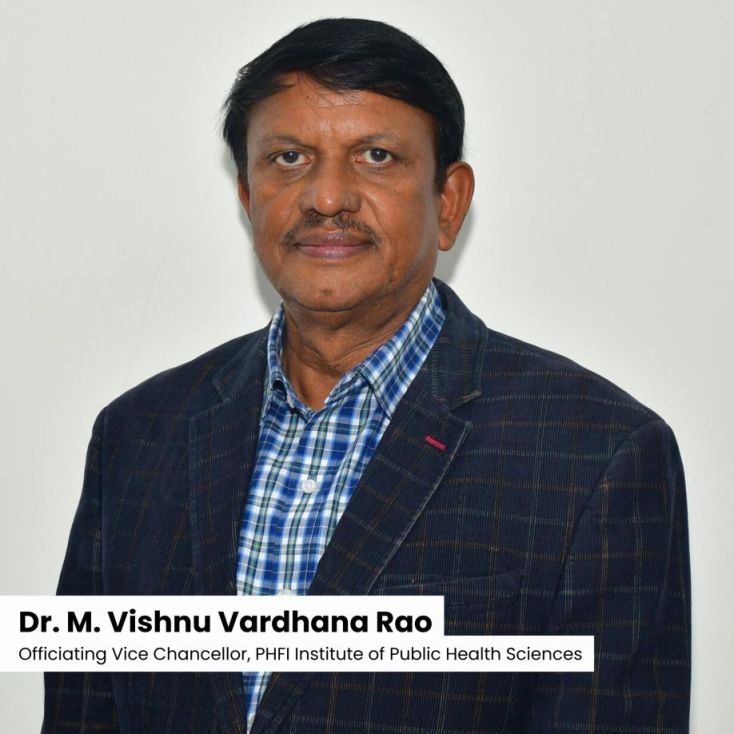
Even as India continues to expand its healthcare infrastructure and increase public health spending, the country faces a less visible but equally significant challenge—a critical shortage of trained public health professionals capable of responding to future health emergencies, according to Dr. M. Vishnu Vardhana Rao, Officiating Vice Chancellor of the PHFI Institute of Public Health Sciences (Deemed to be University).
In a thought-provoking article titled “India's Next Health Crisis: It Is Not a Disease. It Is a Workforce Gap,” Dr. Rao argues that while India has made substantial investments in hospitals and healthcare infrastructure, the country continues to face a severe shortage of professionals equipped to prevent, manage, and respond to public health emergencies.
Reflecting on the COVID-19 pandemic, Dr. Rao notes that India rapidly created hospitals and expanded critical care facilities but struggled to mobilise epidemiologists, public health managers, data scientists, and community health workers. Building such a skilled workforce, he says, requires years of sustained investment and institutional support.
India's health budget has crossed ₹1.06 lakh crore this year, demonstrating a strong commitment to strengthening healthcare infrastructure. However, Dr. Rao stresses that hospitals and health centres can deliver meaningful outcomes only when supported by trained public health professionals who can design outreach programmes, analyse health data, monitor disease trends, and connect healthcare systems with communities.
He highlights that India currently faces a shortage of nearly 45,000 qualified public health professionals and that public health education has not kept pace with the rapid expansion of medical education. Public health, he explains, focuses on preventing disease outbreaks, developing vaccination strategies, building health surveillance systems, and shaping policies that improve access to quality healthcare.
The article also underscores the growing importance of the One Health approach, which recognises the interconnectedness of human, animal, and environmental health. The COVID-19 pandemic demonstrated that emerging diseases are closely linked to environmental changes and require multidisciplinary expertise to manage effectively.
Dr. Rao further emphasises that the rapid growth of digital health technologies, electronic health records, telemedicine platforms, and wearable devices has created an urgent need for professionals who can interpret and apply health data for informed policymaking and disease surveillance.
Welcoming recent initiatives such as state governments exploring dedicated public health cadres and partnerships aimed at strengthening public health education and policy capacity, Dr. Rao says these are encouraging developments, but warns that lasting change requires sustained institutional investment.
“The pandemic offered a costly lesson on the consequences of inadequate public health capacity. The challenge before us is whether we treat it as a one-time emergency or as a lasting reminder to build a stronger and more resilient health system,” he concludes.
Based in Hyderabad, the PHFI Institute of Public Health Sciences (Deemed to be University), India's first and only deemed university exclusively dedicated to public health education and research, continues to strengthen the country's public health ecosystem through education, research, capacity building, and policy engagement aimed at preparing India for future health challenges.